
In this Sunday’s Gospel, Jesus puts loving God and our neighbors at the center of everything. It sounds simple enough, but we need to remember something important about that word, neighbor: It doesn’t just mean the people we like, get along with, or enjoy spending time with. It also includes people we may find difficult to love.
Most of us have probably heard (or said) the familiar line, “You don’t have to like someone (perhaps a sibling), but you have to love them.” We often tell children this, but I think adults could use a reminder every now and then, too. After all, it’s pretty easy to love people who are easy to love, but what about the person who cuts you off in traffic, jumps ahead of you in line, or takes forever when you’re already running late? What about someone who doesn’t do things the way you think they should, sits in “your” pew at church, or never misses a chance to tell you why your political opinions are wrong? Yep. Jesus is talking about those people, too.
So, how do we actually love them? First, I think we need to recognize that it’s perfectly okay to get frustrated or annoyed! We’re human. We have emotions, opinions, preferences, and, sometimes, very little patience. However, it’s in what we do after that initial reaction that gives our faith a chance to make a difference.
We may not be able to stop ourselves from feeling annoyed, but we can choose what we do with that feeling. Sometimes, all it takes is a few seconds to interrupt our usual response, take a deep breath, and say a quick prayer, even something as simple as, “Lord, help me see this person through Your eyes.” It doesn’t have to be complicated or take more than a few seconds—just enough time to remind ourselves that the person frustrating us is also someone God loves.
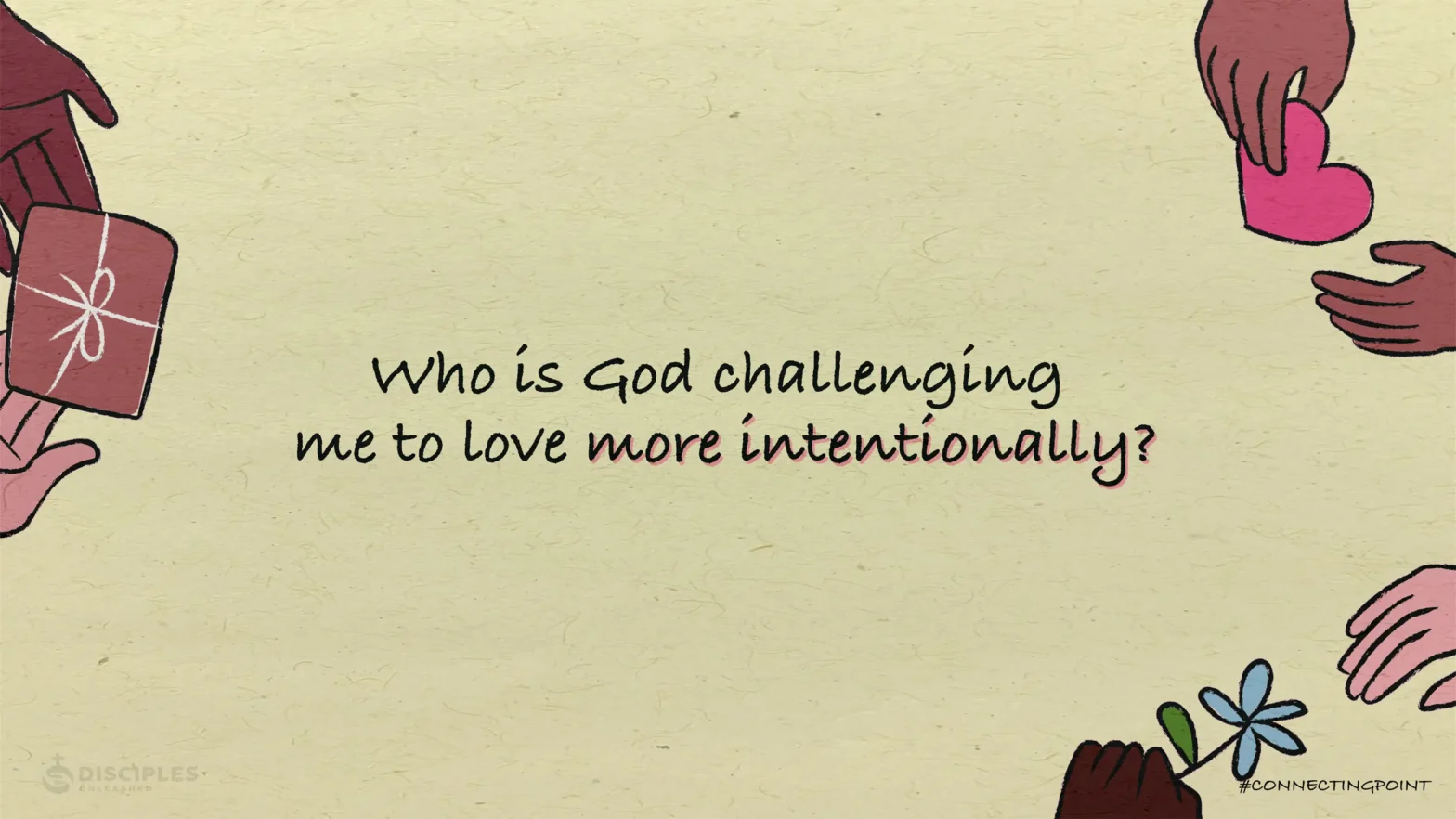
Now, I want you to think of one person in your life who regularly bothers or annoys you. Maybe it’s someone at work, a neighbor, a family member, or someone you see at church. Chances are that a name or face came to mind pretty quickly. Here’s where I think our Connecting Point becomes especially important: It’s asking us to love more intentionally. And that means doing more than simply praying, “God, please give me the patience to deal with this person today!”
The next time you see that person, start with a genuine smile and a friendly “Good morning!” Ask them how they’re doing, and actually listen to the answer. If you know something about their life, ask about their children, how their weekend went, or whether they watched the Lions game. If you don’t know them very well, start with something simple. Better yet, find something you can genuinely compliment them on. We all know how good it feels when someone notices something about our hair, what we’re wearing, or something we did well, and offers a kind word. Even the smallest comments can make a difference in someone’s day.
And here’s the thing: You don’t have to suddenly become best friends with someone to show them love. You don’t even have to agree with them. You just have to choose to treat them with the same kindness and respect you would hope to receive—that’s what it means to be intentional. It’s choosing kindness when being annoyed would be easier. It’s making an effort when we’d rather avoid someone. It’s remembering that loving our neighbor isn’t just something we’re supposed to believe in; it’s something we’re supposed to do.
You might be surprised by what happens when you try. Those small gestures can have a twofold effect: They might brighten someone else’s day and change your attitude toward that person. Over time, someone who once seemed like a constant source of frustration might become a little easier to understand, appreciate, and, yes, even love. So, this week, think about that one person who came to mind earlier. Don’t just ask God for the patience to put up with them; ask for help finding one small way to show them love.
En el Evangelio de este domingo, Jesús sitúa el amor a Dios y al prójimo en el centro de todo. Parece algo sencillo, pero debemos recordar un detalle importante sobre la palabra «prójimo»: no se refiere únicamente a las personas que nos caen bien, con las que nos llevamos bien o con las que disfrutamos pasar el tiempo. También incluye a aquellas a quienes nos resulta difícil amar.
La mayoría de nosotros probablemente hemos escuchado (o dicho) la conocida frase: «No hace falta que alguien te caiga bien —quizás un hermano—, pero aun así debes amarlo». A menudo se lo decimos a los niños, pero creo que a los adultos también nos viene bien recordarlo de vez en cuando. Al fin y al cabo, es muy fácil amar a quienes son fáciles de querer; pero ¿qué hay de la persona que se te cruza bruscamente mientras conduces, que se cuela delante de ti en una fila o que tarda una eternidad cuando tú ya vas con prisa? ¿Qué hay de alguien que no hace las cosas como tú crees que debería hacerlas, que se sienta en «tu» banco en la iglesia o que nunca pierde la oportunidad de decirte por qué tus opiniones políticas son erróneas? Pues sí: Jesús también se refiere a esas personas.
Entonces, ¿cómo podemos amarlas realmente? En primer lugar, debemos reconocer que es perfectamente normal sentir frustración o molestia. Somos humanos; tenemos emociones, opiniones, preferencias y, a veces, muy poca paciencia. Sin embargo, es en nuestra reacción posterior a ese sentimiento inicial donde nuestra fe tiene la oportunidad de marcar la diferencia.
Quizás no podamos evitar sentirnos molestos, pero sí podemos elegir qué hacer con ese sentimiento. A veces, basta con unos segundos para interrumpir nuestra respuesta habitual, respirar hondo y hacer una oración breve; algo tan sencillo como: «Señor, ayúdame a ver a esta persona a través de Tus ojos». No tiene por qué ser algo complicado ni llevar más de unos pocos segundos: es tiempo suficiente para recordarnos que esa persona que nos frustra es, también, alguien a quien Dios ama.
Ahora, piensa en una persona de tu vida que, habitualmente, te molesta o te causa fastidio. Tal vez sea alguien del trabajo, un vecino, un familiar o alguien a quien ves en la iglesia. Es muy probable que, al leer esto, te haya venido a la mente un nombre o un rostro de inmediato. Aquí es donde nuestro «punto de conexión» cobra especial importancia: nos invita a amar de una manera más intencional. Y eso implica ir más allá de simplemente orar: «¡Dios, por favor, dame paciencia para lidiar con esta persona hoy!».
La próxima vez que te encuentres con esa persona, comienza con una sonrisa sincera y un cordial «¡Buenos días!». Pregúntale cómo está y escucha realmente su respuesta. Si sabes algo sobre su vida, pregúntale por sus hijos, cómo le fue el fin de semana o si vio el partido de los Lions. Si no la conoces muy bien, empieza con algo sencillo. Mejor aún, busca algo por lo que puedas hacerle un cumplido sincero. Todos sabemos lo bien que se siente cuando alguien nota algo en nuestro cabello, en nuestra ropa o en algo que hicimos bien, y nos dedica unas palabras amables. Incluso el comentario más pequeño puede marcar la diferencia en el día de alguien.
Y aquí está la clave: no hace falta convertirte de repente en su mejor amigo para demostrarle amor. Ni siquiera es necesario que estés de acuerdo con esa persona. Solo tienes que decidir tratarla con la misma amabilidad y el mismo respeto que a ti te gustaría recibir; eso es lo que significa ser intencional. Es elegir la amabilidad cuando sería más fácil dejarse llevar por la molestia. Es esforzarse cuando, en realidad, preferiríamos evitar a alguien. Es recordar que amar al prójimo no es solo algo en lo que debemos creer, sino algo que debemos poner en práctica.
Te sorprenderá lo que sucede cuando lo intentas. Estos pequeños gestos tienen un doble efecto: pueden alegrar el día de la otra persona y, al mismo tiempo, transformar tu propia actitud hacia ella. Con el tiempo, alguien que antes parecía una fuente constante de frustración puede volverse más fácil de comprender, de valorar y, sí, incluso de amar. Así que, esta semana, piensa en esa persona que te vino a la mente hace un momento. No le pidas a Dios únicamente paciencia para soportarla; pídele ayuda para encontrar una pequeña forma de demostrarle amor.