
Make Christ your first priority.
Recently, while listening to a podcast by Fr. Mike Schmitz, I was inspired by his discussion of how to order life’s various demands. Citing Matthew 6:33, “But seek first the kingdom [of God] and his righteousness, and all these things will be given you besides,” Fr. Mike suggested that we simply must “make Christ our first priority, and then everything else will fall into proper place.”
In the first reading this weekend (Isaiah 45:1, 4–6), we hear, “I am the LORD, and there is no other, there is no God besides me.” We, believers, know there is only one God, but this scripture also means that nothing else in our lives should take precedence over Him. We must honor God above all things. Furthermore, our Responsorial Psalm (96:1, 3, 4–5, 7–8, 9–10) is a call to direct action, reminding us to “Give the Lord glory and honor.” Still, in the Gospel (Matthew 22:15–21), Jesus says, “Repay to Caesar what belongs to Caesar and to God what belongs to God.” The coin bears Caesar’s image, but we bear the image of God; we belong to Him.
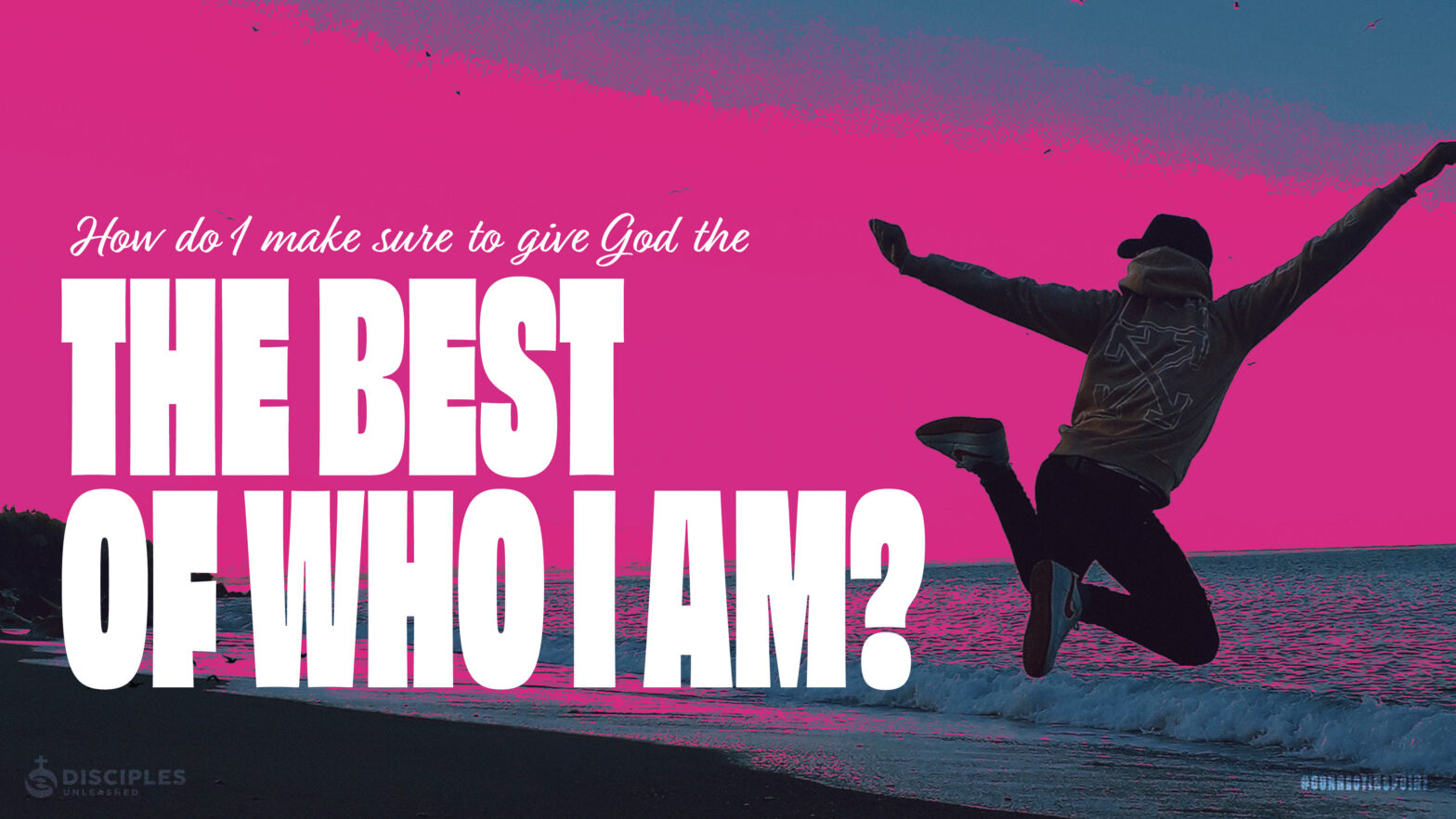
Because we belong to God, we honor Him by selflessly giving Him our time, talents, attention, relationships, choices, and monetary gifts. Are we always giving Him our best—or merely our leftovers?
This reminds me of the “Widow’s Mite” story, a great scriptural illustration of Fr. Mike’s principle, “Make Christ our first priority, and then everything else will fall into its proper place.” In Mark 12:41–44 and Luke 21:1–4, Jesus watches people place their offerings into the Temple treasury. The wealthy people contribute substantial amounts, but a poor widow puts in two small coins. Jesus says, “She, from her poverty, has contributed all she had, her whole livelihood” (Mark 12:44). Although her amount is comparatively small, the priority is far greater. The widow puts God before herself, giving not from her surplus but from what she needs to live. She puts her total trust in God. As we make God our priority, we are called not to be stingy with our money.
We are also called not to be stingy with our love. Is unconditional love always easy? Isn’t it much easier to be joyful, kind, and loving when we are around the people we love and when everything is going well? The real test comes when life stresses us out, and we bring our dark sides, frustrations, conflicts, and differences into relationships and into how we treat one another. The bible tells us to love our neighbors and our enemies, but also the crabby people and those who don’t vote the same way we do. These are opportunities when keeping God’s love a priority is a real challenge. Sometimes, loving them may seem impossible.
Finally, there is prayer. When it seems impossible to love, turn to God in prayer and ask Him for the strength to love with His love. Make it a daily priority to come to God in prayer. Give Him your best, not your leftovers.
Haz de Cristo tu prioridad absoluta.
Hace poco, mientras escuchaba un pódcast del padre Mike Schmitz, me sentí inspirado por su reflexión sobre cómo ordenar las diversas exigencias de la vida. Citando Mateo 6:33 —«Busquen primero el reino [de Dios] y su justicia, y todo lo demás se les dará por añadidura»—, el padre Mike sugirió que simplemente debemos «hacer de Cristo nuestra prioridad absoluta y, entonces, todo lo demás ocupará su lugar adecuado».
En la primera lectura de este fin de semana (Isaías 45, 1. 4–6), escuchamos: «Yo soy el Señor y no hay otro; fuera de mí no hay Dios». Nosotros, los creyentes, sabemos que solo hay un Dios, pero esta Escritura también significa que nada más en nuestras vidas debe tener prioridad sobre Él. Debemos honrar a Dios por encima de todas las cosas. Además, nuestro Salmo responsorial (96, 1. 3. 4–5. 7–8. 9–10) es un llamado a la acción directa, recordándonos que debemos «dar al Señor gloria y honor». No obstante, en el Evangelio (Mateo 22, 15–21), Jesús dice: «Paguen al César lo que es del César y a Dios lo que es de Dios». La moneda lleva la imagen del César, pero nosotros llevamos la imagen de Dios; le pertenecemos a Él.
Puesto que pertenecemos a Dios, lo honramos entregándole desinteresadamente nuestro tiempo, talentos, atención, relaciones, decisiones y ofrendas económicas. ¿Le estamos dando siempre lo mejor de nosotros, o simplemente las sobras?
Esto me recuerda la historia de la «moneda de la viuda», un magnífico ejemplo bíblico del principio del padre Mike: «Hacer de Cristo nuestra prioridad absoluta y, entonces, todo lo demás ocupará su lugar adecuado». En Marcos 12, 41–44 y Lucas 21, 1–4, Jesús observa a la gente depositar sus ofrendas en el tesoro del Templo. Los ricos contribuyen con cantidades considerables, pero una viuda pobre deposita dos monedas pequeñas. Jesús dice: «Ella, en su pobreza, ha dado todo lo que tenía, todo su sustento» (Marcos 12, 44). Aunque la cantidad que aporta es comparativamente pequeña, su prioridad es mucho mayor. La viuda antepone a Dios a sí misma; no da de lo que le sobra, sino de lo que necesita para vivir. Deposita toda su confianza en Dios. Al hacer de Dios nuestra prioridad, estamos llamados a no ser tacaños con nuestro dinero.
También estamos llamados a no ser tacaños con nuestro amor. ¿Es siempre fácil amar incondicionalmente? ¿No resulta mucho más sencillo mostrarse alegre, amable y cariñoso cuando estamos con las personas que amamos y todo marcha bien? La verdadera prueba llega cuando la vida nos somete a estrés y trasladamos nuestras facetas más oscuras, frustraciones, conflictos y diferencias a nuestras relaciones y a la forma en que tratamos a los demás. La Biblia nos manda amar al prójimo y a los enemigos, pero también a las personas de mal carácter y a quienes no votan como nosotros. En estas situaciones, mantener el amor de Dios como prioridad supone un verdadero desafío. A veces, amarlos puede parecer imposible.
Por último, está la oración. Cuando amar parezca imposible, acude a Dios en oración y pídele fuerzas para amar con su amor. Haz de la oración ante Dios una prioridad diaria. Ofrécele lo mejor de ti, no las sobras.